What Cryo Body Sculpting Actually Does to Your Body (And What It Won't Do)
There is a lot of noise around the words "body sculpting." Some of it is hype, some of it is genuine science, and a lot of it gets mashed together into something that sounds either magical or scary. Neither is accurate. If you are considering cryo body sculpting, you deserve a straight, grown-up explanation of what happens inside your body during a session, what the research really says, and what this treatment will and will not do for you.
So let's walk through it.
First, what we mean by "cryo body sculpting" at ShiftSetGo
Let's clear up the vocabulary, because three very different things share similar names.
Cryo body sculpting is not whole-body cryotherapy. That is the standing-in-a-frosty-chamber treatment used mostly for recovery and inflammation. We are not freezing your whole body.
Cryo body sculpting is also not surgical liposuction. There are no incisions, no needles, no anesthesia, and no recovery time on the couch.
At ShiftSetGo, cryo body sculpting is a non-invasive, in-office treatment performed with a handheld wand that alternates between controlled cold and targeted heat. A session takes about 30 to 60 minutes depending on the area, and you can walk straight back into your day after. Most clients describe it as cold but comfortable.
The cold portion of the treatment is built on a process called cryolipolysis, a peer-reviewed and FDA-cleared category of non-invasive body contouring.[1] That is the part doing the heavy lifting on stubborn fat, and it is the part most worth understanding.
The Science of Cold: Why Fat Cells Freeze Before Skin Does
Here is the part that sounds almost too clever to be real, but it has been studied for more than a decade.
Fat cells, technically called adipocytes, are more vulnerable to cold than the surrounding tissue. Your skin, nerves, and muscle can tolerate the temperatures used in cryolipolysis without lasting damage. Fat cells cannot. When they are cooled in that controlled window, they undergo a process called apoptosis, which is just the scientific term for programmed cell death. The cells essentially shut down, and over the following days and weeks, your lymphatic system carries the debris out, the same way it handles any cell turnover.
This is the distinction that matters most, and it is the one that surprises people:
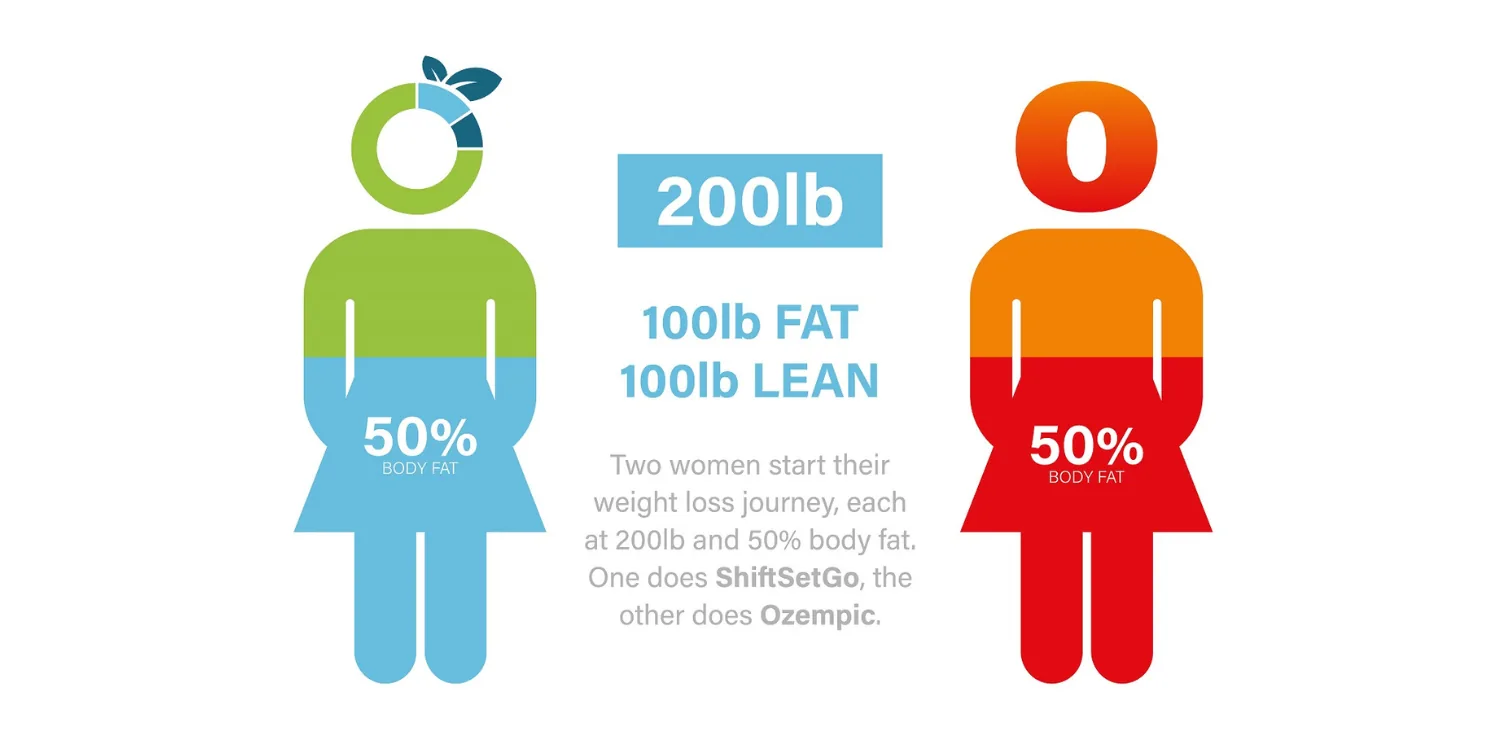
Diet and exercise shrink fat cells. Cryolipolysis destroys them.
When you lose weight on a program, your fat cells empty out and get smaller, but the cells themselves are still there, waiting to refill. With cryolipolysis, the cells in the treated area are eliminated through the lymphatic system and not replaced. Once they're gone, they're gone. That is why we talk about cryo as body contouring rather than weight loss. It is a different mechanism entirely.
Why Heat Is Part of the Same Treatment
If our machine only delivered cold, you would only be working one layer of tissue. The heat cycles add a second layer to the work.
Heat cycles serve two purposes. They stimulate collagen production in the skin overlying the treatment area, which helps with tightening and tone. They also make the cold portion more tolerable, because alternating sensations are easier on the body than sustained cold.
You may have seen other cryo systems pair cold with EMS, electrical muscle stimulation that contracts the underlying muscle during the session. Our wand supports EMS for the cases where it makes sense, but most clients do not get it as part of a fat-loss session. EMS can keep tissue warmer than it should be during the cold phase, which can prevent the treatment area from reaching the temperature needed to actually trigger the cryolipolysis effect. For fat loss, we keep the focus on cold and heat, and we use EMS selectively when toning is the explicit goal.
What the Research Actually Shows
Cryolipolysis is one of the most-studied non-invasive body contouring methods on the market, which is rare for an aesthetic category.
A widely cited review in Clinical, Cosmetic and Investigational Dermatology reported up to a 25 percent reduction in subcutaneous fat at the treated site after a single cryolipolysis cycle, alongside high patient satisfaction and minimal side effects.[1] More recent randomized work published in 2024 looked at multi-session protocols and found measurable changes in BMI and overall fat mass when treatments were stacked over time, not just localized inch loss. Systematic reviews continue to back up the local circumference and fat-thickness reductions seen across years of clinical studies.
So when we say this is backed by science, we are not waving a brochure around. There is a real evidence base, and it has held up across multiple peer-reviewed studies and FDA review.[2]
What Cryo Will NOT Do (the honest part)
Now the part most providers skim over.
Cryo body sculpting is body contouring. It is not a weight loss treatment. Both the American Society for Dermatologic Surgery and the American Society of Plastic Surgeons draw that line clearly, and so do we.[3] The best candidates are women who are at or near their goal weight with pinchable, stubborn fat in a specific area that has not budged with nutrition or training. If you are still 30, 40, or 80 pounds out from your goal, cryo is not the place to start. The ShiftSetGo program is.
Cryo will not replace nutrition. It will not replace strength training. It will not undo a metabolic pattern that needs a real reset. And it is not a free pass to eat whatever you want, especially during a treatment series. Your food choices still matter, very much. The simplest way to think about it: cryo works with your nutrition, not in spite of it. The clients who get the best results are the ones who keep their food quality steady while they're going through a treatment plan. Cryo and good nutrition are partners, not substitutes.
It is also not for everyone. Cryo is not recommended during pregnancy or breastfeeding, or for anyone with Raynaud's disease, a cold allergy, or active cancer. A reputable provider will walk through your medical history before your first session and flag anything that needs adjusting.
One last thing worth mentioning so this article stays honest. There is a rare side effect called paradoxical adipose hyperplasia, where the treated area enlarges slightly instead of reducing. A 2024 systematic review and meta-analysis put the pooled incidence at roughly 0.22 percent.[4] That is a real number, not a zero. We do not bury it, and any reputable provider should be willing to talk about it openly.
How to Get the Most Out of Your Sessions
If you've decided cryo is the right next step, a few simple things will make a meaningful difference in your results.
Hydration is the single biggest lever you control. Aim for at least 80 ounces of water a day during your treatment series. Your lymphatic system is what carries those destroyed fat cells out, and it works better in a hydrated body than a dry one.
Keep your nutrition steady. You do not need a dramatic pre-session protocol or a list of forbidden foods. You do need quality food going in. Lean protein, plenty of vegetables, and a steady eating pattern that supports the work. If you would not eat it on a Tuesday, do not eat it the day of your cryo session either. The treatment and the food are doing the same job from two different angles. Let them.
Skip the sauna, the hot bath, and the workout for about two hours before your session. The treatment relies on a temperature gradient, and showing up already warm makes it less effective and less comfortable.
Plan on bi-weekly sessions for any given treatment area. Cryolipolysis kicks off a multi-week clearance process. Your lymphatic system needs time to fully break down and remove the fat cells from one round before the next round goes in. Treating the same spot too frequently can short-circuit that process, reduce visible results, and add unnecessary inflammation. Bi-weekly spacing gives the body the runway it needs and gives you progress pictures that actually reflect what is happening underneath.
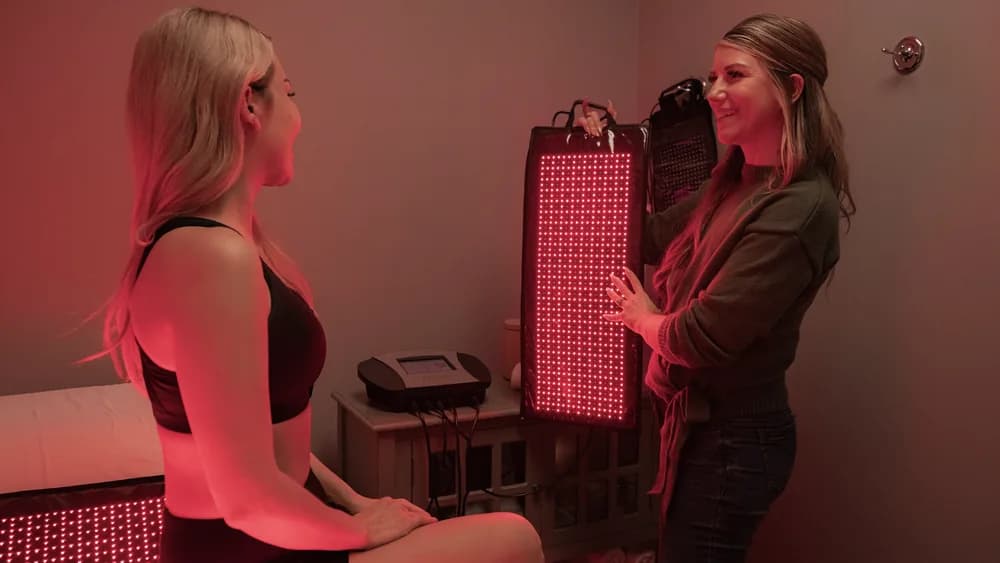
If you want to come in more often than every other week, that is great. The most efficient way to do it is to alternate treatment areas, say upper abdomen one week and lower abdomen the next, so each individual area is still on a roughly bi-weekly schedule. A common rhythm clients build into their plan is alternating a body session and a cryo facial week to week, often with red light therapy added to either or both. The cryo facial is also bi-weekly on its own, because the collagen and elastin response it stimulates needs about two weeks to develop.
And if you are already on the ShiftSetGo program, cryo tends to compound your results in a really satisfying way. The program is changing how your body holds and burns fat overall. Cryo is fine-tuning the areas the program cannot quite reach.
Non-invasive, zero downtime, and grounded in real science. That is the whole pitch, and it is enough.
Ready for your next step?
Book your next cryo session and pick the location that works for you.
Still deciding? Take a look at the full cryo body sculpting overview for before-and-after photos, pricing, and the complete service breakdown.
Sources
- Ingargiola MJ, Motakef S, Chung MT, Vasconez HC, Sasaki GH. Cryolipolysis for noninvasive body contouring: clinical efficacy and patient satisfaction. Clinical, Cosmetic and Investigational Dermatology, 2014. https://pmc.ncbi.nlm.nih.gov/articles/PMC4079633/ ↩
- U.S. Food and Drug Administration. Non-Invasive Body Contouring Technologies. https://www.fda.gov/medical-devices/aesthetic-cosmetic-devices/non-invasive-body-contouring-technologies ↩
- American Society for Dermatologic Surgery. Cryolipolysis. https://www.asds.net/skin-experts/skin-treatments/cryolipolysis ↩
- Incidence of Paradoxical Adipose Hyperplasia After Cryolipolysis: A Systematic Review and Meta-Analysis. Aesthetic Surgery Journal Open Forum, 2024. https://academic.oup.com/asjopenforum/article/doi/10.1093/asjof/ojaf142/8307545 ↩